

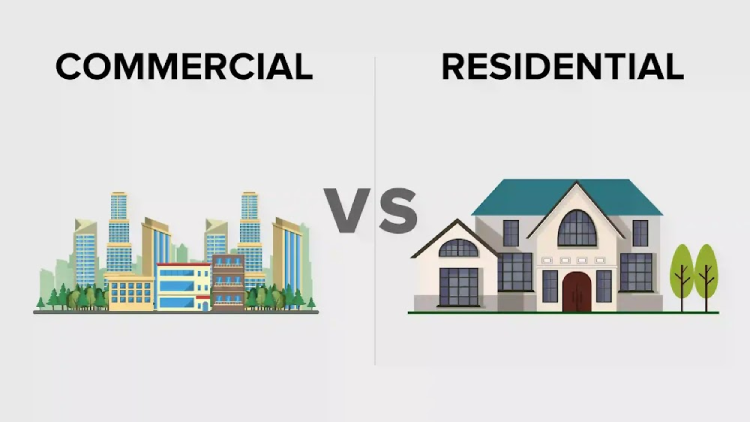
Real estate has long been considered one of the most dependable ways to build wealth, generate passive income, and secure financial stability. However, one of the most important decisions an investor must make is choosing between residential and commercial real estate. At first glance, the difference may seem simple—homes versus business properties—but in reality, each category operates under very different financial dynamics, risk levels, and profit potential.
Understanding which option is more profitable requires a deeper look at how each type of property performs over time, how income is generated, and what kind of commitment is required from the investor.
What is Residential Real Estate and How Does It Perform?
Residential real estate includes properties designed for people to live in, such as houses, apartments, and condominiums. It is often the starting point for most investors because it is easier to understand and generally requires less capital compared to commercial investments.
One of the biggest strengths of residential property is its stability. Housing is a basic human need, which means demand tends to remain steady regardless of economic conditions. Even during financial downturns, people may downsize or relocate, but they rarely stop needing a place to live. This consistent demand reduces the risk of long-term vacancies and makes residential investments relatively safer.
In terms of profitability, residential properties usually generate income through monthly rent. While this income is stable, it is often moderate. Rental yields tend to be lower compared to commercial properties, and landlords must frequently handle tenant-related issues such as maintenance, repairs, and lease renewals. Additionally, tenants typically stay for shorter periods, which can lead to more frequent turnover and occasional gaps in rental income.
Despite these limitations, residential real estate offers strong advantages in liquidity. Properties are generally easier to sell because there is a larger pool of potential buyers. This flexibility makes it an attractive option for investors who want a balance between income and accessibility.
What is Commercial Real Estate and Why is It Considered More Profitable?
Commercial real estate refers to properties used for business purposes, including office buildings, retail stores, shopping centers, and industrial spaces. These properties operate on a different scale compared to residential real estate and are often associated with higher income potential.
The primary reason commercial real estate is considered more profitable is the higher rental income. Businesses are willing to pay premium rents, especially in strategic or high-traffic locations, because the property directly contributes to their revenue. In addition, lease agreements in commercial real estate are typically long-term, often ranging from several years to even decades. This creates a more predictable and stable cash flow for the property owner.
Another advantage is that many commercial leases shift certain responsibilities—such as maintenance costs, property taxes, and insurance—to the tenant. This reduces the ongoing burden on the investor and can significantly improve net profit margins.
However, higher returns come with higher risks. Commercial properties are more sensitive to economic cycles. If businesses struggle, relocate, or shut down, property owners may face extended vacancies. Unlike residential properties, which can usually be rented relatively quickly, commercial spaces may take longer to fill due to their specialized nature.
Furthermore, the initial investment required for commercial real estate is significantly higher, making it less accessible for new investors.
Comparing Profitability: Income, Risk, and Growth
When evaluating profitability, it is important to consider more than just rental income. True profitability includes return on investment (ROI), risk exposure, maintenance costs, and long-term appreciation.
Commercial real estate often leads in terms of rental yield and overall ROI. A well-located commercial property can generate significantly higher income than a residential unit of similar value. The long-term leases also provide income stability, which can be particularly attractive for investors seeking predictable returns.
On the other hand, residential real estate excels in stability and lower risk. While the income may be smaller, it is generally more consistent, and the chances of prolonged vacancy are lower. Residential properties also tend to appreciate steadily over time, contributing to long-term wealth accumulation.
Liquidity is another important factor. Residential properties are easier to buy and sell, while commercial properties may take longer to transact due to their higher value and more limited buyer pool.
Risk vs Reward: Choosing the Right Strategy
The decision between residential and commercial real estate ultimately comes down to your willingness to balance risk and reward. Residential real estate offers a safer, more predictable path with moderate returns. It is well-suited for beginners or those who prefer a steady income stream without taking on significant risk.
Commercial real estate, in contrast, is better suited for investors who are willing to commit larger amounts of capital and accept higher risk in exchange for greater returns. It requires a deeper understanding of market conditions, tenant behavior, and location dynamics.
Many experienced investors adopt a hybrid strategy. They begin with residential properties to build capital and gain experience, then gradually expand into commercial real estate to increase profitability. This approach allows them to benefit from the stability of residential investments while taking advantage of the higher income potential offered by commercial properties.
Final Thoughts
There is no single answer to which type of real estate is more profitable. Commercial properties generally offer higher income and better returns, but they come with increased risk and higher entry costs. Residential properties provide stability, easier management, and consistent demand, making them a reliable choice for long-term investment.
The most effective strategy depends on your financial goals, risk tolerance, and level of experience. By understanding the strengths and limitations of each option, you can make a more informed decision and build a real estate portfolio that aligns with your objectives.